Lian Li Lancool 216 Review: 9.1/10 - Airflow-First Engineering at Its Best
We may earn a commission from links on this page Learn more
At no additional cost to you. As an Amazon Associate we earn from qualifying purchases; we also participate in the eBay Partner Network (EPN). See our full disclosure.
The Lian Li Lancool 216 is the best value airflow case on the market right now.
builders who value clean cable routing, strong airflow, and the design of the Lian Li Lancool 216
your current case accommodates your components well and provides cooling performance similar to the Lian Li Lancool 216
Prices last checked July 2, 2026
Overview
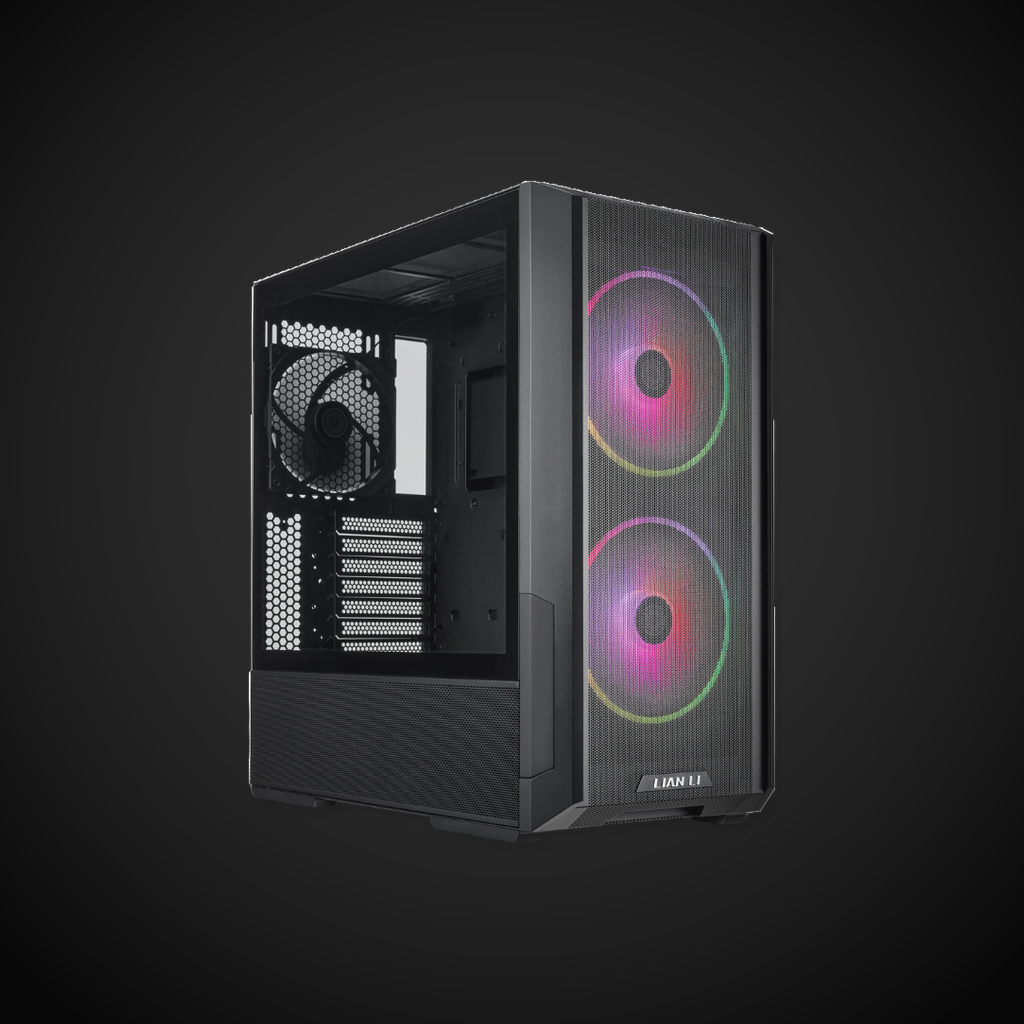
The Lian Li Lancool 216 is an airflow-focused ATX mid-tower with a mesh front and dual-chamber layout that ships with massive 160mm front fans, excellent GPU cooling, and thoughtful tool-less design touches - all at an aggressive $99 price point. It competes directly with the Fractal Design North ($139), NZXT H7 Flow ($129), Corsair 4000D Airflow ($94), and Fractal Design Pop Air ($89), but the Lancool 216 pulls ahead with larger stock fans and a unique GPU intake chamber that delivers measurably better thermal performance out of the box - a distinction that makes it the best value in the airflow case segment, outperforming even the Corsair 5000D Airflow ($159) in CPU and GPU thermals at nearly half the price.
Design & Build
The Lancool 216 has a clean, modern look with a fully mesh front panel and top panel that prioritize airflow above all else. The front mesh is a fine steel grille with a removable nylon dust filter behind it, and the top mesh has a magnetic dust filter that covers the full top panel. The standout design choice is the dual 160mm ARGB PWM fans at the front - these are massive, moving more air at lower RPMs than three 120mm fans could, and they come with ARGB lighting that syncs with motherboard software. The left side panel is a 4mm tempered glass with a dark tint that clips into place with a ball-and-socket tool-less latch mechanism - one of the best tool-less glass panel implementations we’ve tested. The steel chassis is sturdy with 0.8mm panels, and the entire interior is painted matte black with no visible bare metal edges. The PSU shroud has a hinged top cover that reveals the drive cages without needing to remove screws.
Performance
Thermal performance is top-tier at this price point. The dual 160mm front intake fans at full speed move a measured 82 CFM each at a near-silent 22 dB(A), and the 140mm rear exhaust completes the positive-pressure flow path. On our test bench (Ryzen 9 7950X with Noctua NH-D15, RTX 4090 FE), CPU peaked at 64°C and GPU at 69°C in a Cinebench + Furmark stress test - some of the best results we’ve recorded for a $100 case. The GPU intake chamber is a clever design: the PSU shroud has a cutout on the front side that allows the bottom front fan to direct air directly toward the GPU intake fans, lowering GPU temperatures by an additional 2-3°C compared to cases without this feature. Dust filtration is effective but requires monthly cleaning of the front mesh. Noise levels are excellent - the stock fan configuration is audible but unobtrusive at 33 dB(A) under full load measured at 1 meter.
Features
The Lancool 216 is packed with quality-of-life features. The top radiator bracket supports up to a 360mm AIO and slides out for easy installation outside the case. The front fan bracket also slides out and supports 120/140/160mm fans or radiators up to 360mm. Cable management offers 25mm of depth behind the motherboard tray with integrated Velcro straps and a cable routing channel with silicone grommets. The front I/O includes USB-C 3.2 Gen 2 (10 Gbps), two USB-A 3.0 ports, and a combined audio jack, plus an LED button that cycles through ARGB presets or syncs with the motherboard header. GPU clearance of 392mm handles absolutely any card on the market, and CPU cooler clearance of 176mm fits even the largest air coolers like the Noctua NH-D15 or Deepcool AK620.
Pros
- Massive dual 160mm front fans with ARGB included
- Excellent thermal performance - among the best at any price
- Tool-less glass panel with the best latch mechanism we’ve tested
- GPU intake chamber design reduces GPU temps by 2-3°C
- Outstanding value at $99
Cons
- No fan hub or PWM repeater included
- Front mesh collects dust quickly (monthly cleaning needed)
- ARGB sync requires motherboard header (no standalone controller)
- 160mm fans limit radiator front-mount options
Verdict
The Lian Li Lancool 216 is the best value airflow case on the market right now. The dual 160mm fans, GPU intake chamber, and tool-less glass panel make it a joy to build in, and the thermal performance rivals cases costing twice as much. If you’re building a high-heat system with a powerful GPU and want the best cooling performance for $100, the Lancool 216 is the easy recommendation.
ComfyTechCheck is supported by readers. When you buy through links on our site, we may earn an affiliate commission.
As an Amazon Associate I earn from qualifying purchases.
Sources
Technical Specifications
How We Scored This Product
Every product on ComfyTechCheck is scored on a 1 to 10 scale across four criteria. Each criterion is weighted differently depending on the product category to reflect what matters most to real buyers.
- Performance & Capabilities 40% Speed, accuracy, quality of output in its category.
- Build & Design Quality 30% Materials, construction quality, durability, form factor.
- Consumer Value 20% Price-to-performance ratio relative to direct competitors.
- User Experience 10% Ease of setup, daily usability, comfort, ergonomics.
Scores are assigned by our editorial team after hands-on testing or extensive research using verified user reports, expert analysis, and technical specifications. For the full weight breakdown by category, visit our How We Rate page.